
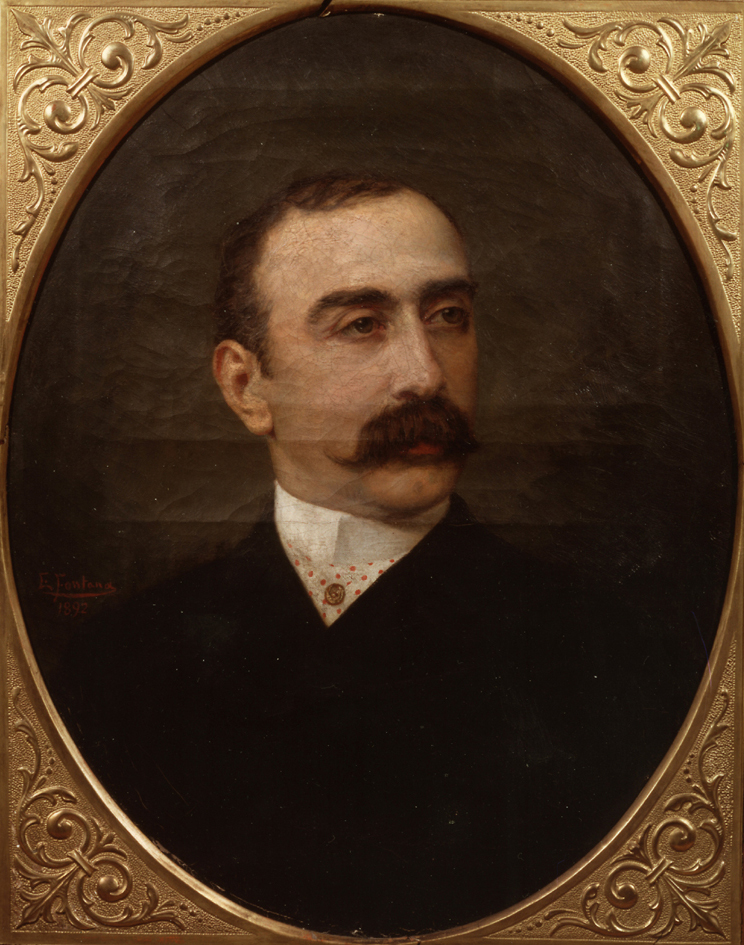
Casa Sonzogno was founded in 1874 as the music division of the publishing house of the same name, established in 1804 by Giovanni Battista Sonzogno.
His nephew, Edoardo Sonzogno, was a key figure in Italian musical life during the last two decades of the 19th century: as a publisher of some of the most famous opera composers of the era, as an impresario both in Italy and abroad, and through the musical magazines Il Teatro illustrato and La Musica popolare.
At first, Edoardo Sonzogno printed affordable sheet music of famous operas and acquired the Italian-language rights to numerous French titles, achieving his first international success with Carmen by Georges Bizet, which gained worldwide acclaim in the edition published by him — only later becoming known in its original French version.
As Friedrich Nietzsche wrote to a friend after a performance of Carmen in Nice in December 1887:
Carmen at the Gran Teatro Italiano: for me, a true event. During these four hours, I understood more things than I usually do in four weeks. Honor to Mr. Sonzogno!
In 1882, Edoardo Sonzogno was among the founders of S.I.A.E. – Società Italiana degli Autori ed Editori, and Casa Musicale Sonzogno remains the only publishing house still active that has been part of it since its inception.
To build an Italian repertoire and discover new talents, starting in 1883 he launched a series of opera competitions.
Giacomo Puccini participated in the first one with Le Villi, but the judging committee was unable to evaluate the score due to the composer’s almost illegible handwriting — or, according to another more widely accepted version, part of the jury deliberately ignored the work’s value, influenced by the powerful rival Ricordi, to prevent Puccini from joining the “Sonzogno stable.”
The second competition (1888) crowned Pietro Mascagni as the winner with Cavalleria rusticana.
The explosive worldwide success of this opera marked the beginning of the Verismo movement and the “Giovane Scuola Italiana” (“Young Italian School”), of which Sonzogno was the most active promoter.
He commissioned, published, and staged — even abroad — numerous works by other composers destined for great success, such as Ruggero Leoncavallo (Pagliacci, Zazà, etc.), Umberto Giordano (Andrea Chénier, Fedora, etc.), and Francesco Cilea (Adriana Lecouvreur, L’Arlesiana, etc.).
Sonzogno also continued his collaboration with Pietro Mascagni, publishing L’amico Fritz, Lodoletta, Il piccolo Marat, and many other titles.
In 1894, Edoardo Sonzogno rebuilt Milan’s old Teatro della Cannobiana, designed by Piermarini, renaming it Teatro Lirico Internazionale, so that his productions could stand as an alternative to those of Teatro alla Scala, Ricordi’s stronghold.
At the Lirico, he organized memorable seasons and launched singers who later became legendary, such as Enrico Caruso.